
Cognitive Behavioural Therapy (CBT) is one of the most widely used and evidence-based approaches in counselling today. CBT focuses on the connection between thoughts, emotions, and behaviours. This practical and goal-oriented approach helps individuals identify unhelpful thinking patterns and replace them with healthier, more balanced ways of thinking and responding.
CBT and Negative Thought Patterns
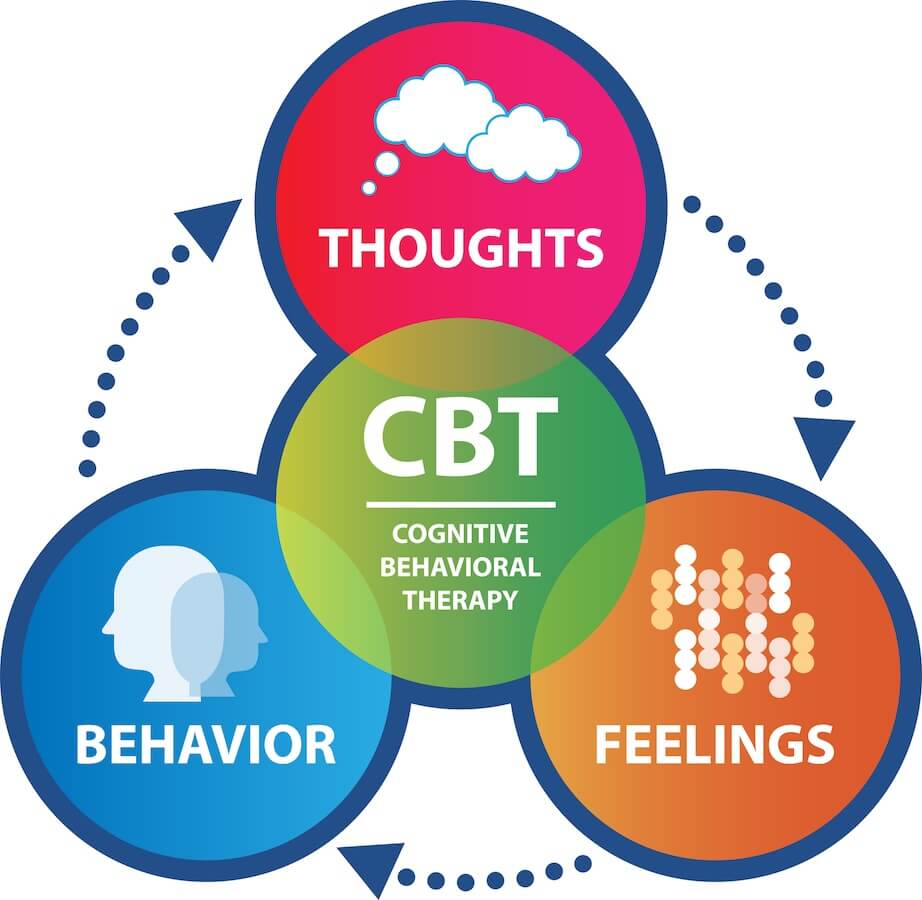
The CBT Triangle
At the core of CBT is the “CBT triangle,” which demonstrates how thoughts, feelings, and behaviours influence one another. For example, if a person thinks, “I always fail,” they may begin to feel discouraged or anxious, which can then lead to behaviours such as avoidance or withdrawal. These behaviours often reinforce their original negative thought, creating a cycle that can be challenging to break. CBT skills can help individuals recognize these patterns and develop strategies to challenge unhelpful thoughts, regulate their emotions, and engage in healthier behaviours.
CBT in Counselling
One of the benefits of CBT is its structured and collaborative nature. Counsellors work alongside clients to identify goals, build coping skills, and practice strategies both inside and outside of sessions. CBT is often short-term and solution-focused, making it a great option for individuals seeking practical tools they can apply in daily life. Some skills often used in CBT counselling can include cognitive restructuring, behavioural activation, mindfulness strategies, exposure exercises, and journaling.
Treating Anxiety, Depression, PTSD, and More
CBT has been shown to be effective in treating a wide range of mental health concerns and behavioural presentations. It is commonly used for anxiety disorders (Mayo Clinic), depression, stress management, panic attacks, post-traumatic stress disorder (PTSD), and phobias. Additionally, CBT can support individuals experiencing low self-esteem, anger and dysregulation, perfectionism, relationship challenges, problem gambling, video game addiction, and unhealthy coping behaviours. Kindbridge Behavioral Health based in the USA, provides a helpful article on unhelpful thinking patterns (Cognitive Distortions in Gambling on Sports) for individuals engaged in sports betting and also cites CBT for treating gambling addiction.

Counselling with Megan Bonnell – MC, CCC
This approach is also beneficial for clients who struggle with negative self-talk, emotional regulation, or patterns of avoidance. For example, individuals with social anxiety may learn to challenge fears of judgment and gradually face anxiety-provoking situations.
Clients experiencing depression may use behavioural activation techniques to reconnect with activities that improve mood and motivation. Because CBT is adaptable and skills-based, it can be used with children, adolescents, and adults.
Overall, CBT works to empower individuals with practical skills and self-awareness. By understanding the relationship between thoughts, emotions, and behaviours, we can learn to interrupt unhelpful cycles and create meaningful change in mental health and daily functioning.
If you are interested in exploring CBT and how it may support your mental health goals, we would be happy to help.
Learn more about our counselling services here, or contact South Edmonton Chiropractic Centre to book a counselling session with Megan Bonnell to discuss whether CBT counselling may be a supportive and beneficial approach for your journey.